
Ode to a Tea Kettle
maybe we aren't who we think we are

Hi, readers of the intangibles! I’m writer and educator Allison Kirkland, and this publication explores creativity, discipline and difference. I’m so glad you’re here.
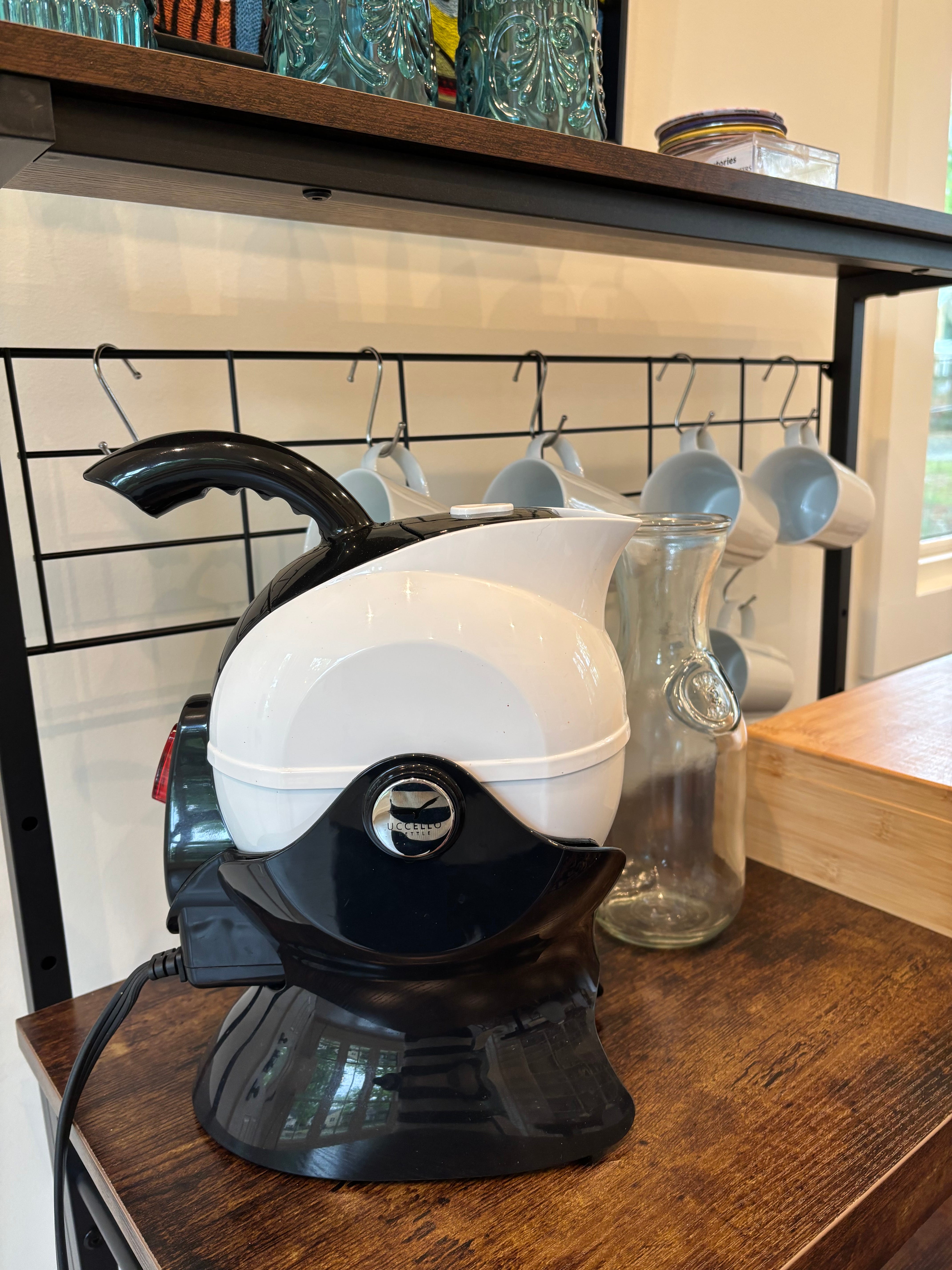
A few years ago my in-laws gave me a tea kettle for Christmas. When I first opened it I wasn't sure what it was. I knew it was something beautiful: it was made of sturdy materials and it looked expensive. It had pleasing lines and a silver medallion fastened to the side of it that said UCCELLO in an ornate but tasteful font.
I looked up at them with a smile on my face, unsure how to respond. "Thank you so much for the ...."
"Tea kettle," said my sister in law when she intuited that I was searching for the word. She lives with chronic illness and it had been her idea to purchase it for me.
"Oh, a kettle! How lovely!" I said, trying to be nice. We already had a kettle in our kitchen, a Le Creuset that sat on our stovetop like a piece of decor. My husband used it once a day to make our morning tea, and sometimes in the evening if our drafty living room was feeling particularly chilly.
I had tried using it a few times but ran into a lot of obstacles: it’s heavy, first of all, and the very first time I tried to pour the hot water into my mug I burned my hands. Also the counter in our kitchen was too high — I needed a step stool to properly fill it with water from the tap. There were too many steps; it was always easier to just let Paul make it.
"We know Paul loves making tea for you, but we thought maybe you’d enjoy making tea yourself. Let me show you how to use it," she said, as she filled it up with water. It has a very light base, even when it's filled to the brim with enough water to make several cups of tea. The handle is sturdy and easy to grip, even if you have a limb difference, like me. It plugs in, so you can use it anywhere, and the button that you push to turn it on moves easily and makes a satisfying click when the water is hot enough. The base of the kettle sits on a cradle, so when the water is ready you don't have to pick up a heavy hot kettle and risk scalding your hands or dropping it. You simply place the mug underneath the spout, and, as the famous nursery rhyme says, tip the kettle and the hot water comes pouring out.
This kettle was prettier than I expected; a pleasing color, soft, sleek lines. I thought of the other accessibility tools that I use, the ones outfitting my car — a knob attached to my steering wheel that’s made out of a jagged piece of unfinished rebar. The pedal extenders that help me reach the pedals of my car that are made of hunks of boxy, unfinished metal. They were eyesores.
I wondered if I would have embraced these necessary tools sooner if they'd been more beautiful. I imagine what the ugly knob that helps me grip my steering wheel might look like if it was designed by Eames, if it had been featured in the pages of Vogue that I used to flip through as a teenager, if it had been bedazzled or had come in an interesting color. I thought about what we are communicating to disabled people when we don't make their tools beautiful. Are disabled lives not worthy of beauty, of elegance? Most of these tools look like people haven’t given them much thought at all.
The ugliness of these tools made me want to keep them secret, to hide them from other people who might think I was ugly by association.
The kettle was a nice gift but I was never going to use it, even though it was more beautiful than other accessible tools I owned. Not because I wasn't appreciative and not because I don't like tea but just because I'm just not someone who makes tea for myself. Kitchens, with their high shelves and sharp knives and slippery, hot pans, have never felt like welcoming spaces to me. I don’t like to cook, I often tell people. I’m not domestic. I stock the fridge and plan the meals but that’s where my involvement in the kitchen ends.
The box that contained my new tea kettle sat unopened for months. I even considered giving it away.
I thought about the tea kettle again when I built a studio in my backyard for writing and holding classes. I saw the still-new box sitting in my closet and a thought passed through my mind: maybe I could set the tea kettle up in my writing studio? I pictured the other writers using it, filling up the base with water and picking out their tea before class. I still didn’t think it was for me.
But when I set it up in my writing studio I discovered something surprising: I love using it to make tea. I love filling up the base of the kettle with water and then setting it in the cradle. I love pushing the button and hearing the click of it when the water is hot. I love wrapping my hands around a warm mug of tea that I’ve made for myself. I feel my body perk up with pride when that happens. When I make myself or someone else a cup of tea, it makes me feel like I’m caring for them. Handing them something warm and comforting. Being a hostess in a space that feels even more like my own, like I’m creating it, giving it atmosphere and warmth.
Before this past year I would have never described myself as nurturing or handy in the kitchen. But using this kettle — much like using the accessibility tools in my car — has re-written that script for me.
Who am I, actually, when I have the proper support systems in place? Maybe I am nurturing. Maybe I am a good hostess. Maybe I am a good driver. Maybe I am someone who loves making a cup of tea. Maybe making tea isn’t just about the risk of burning my hands, but a calming ritual that grounds me. Maybe there are more things about myself left to discover, when the right tools are in place.
In Case You Missed It:
You are reading the intangibles, by writer and creative writing instructor Allison Kirkland.
All writers should be paid for their work. But if a paid subscription doesn't make sense for you right now, there are other ways to support the growth of this reader-supported publication:
click that little heart to "like" the post, which ensures that more people will see it
gift a subscription to a creative friend
share this essay
leave a comment and continue the conversation
Thanks for reading. I’m so glad you’re here.
Reading this account of your tea kettle was as comforting to me as drinking a nice mug of tea. One of the treasures I have from my mother and your grandmother “Ruth” is a proper teapot she had to buy for her visiting Mother-in-law. Granny Ellis was British and had proper tea at the proper time. And - it actually is a piece of art and it came from Hall ceramics!
I love that you found something beautiful and accessible ! And I love your writing Allison. And I love you more.
What a comforting piece. As a former student I take exception to your assessment of your nurturing qualities. You’ve helped many writers become better versions of themselves thru their words.