
Let it soften you
what Liddy Grantland gave me


Hi, readers of the intangibles! I’m writer and educator Allison Kirkland, and this publication explores creativity, discipline and difference. Thanks for being here.
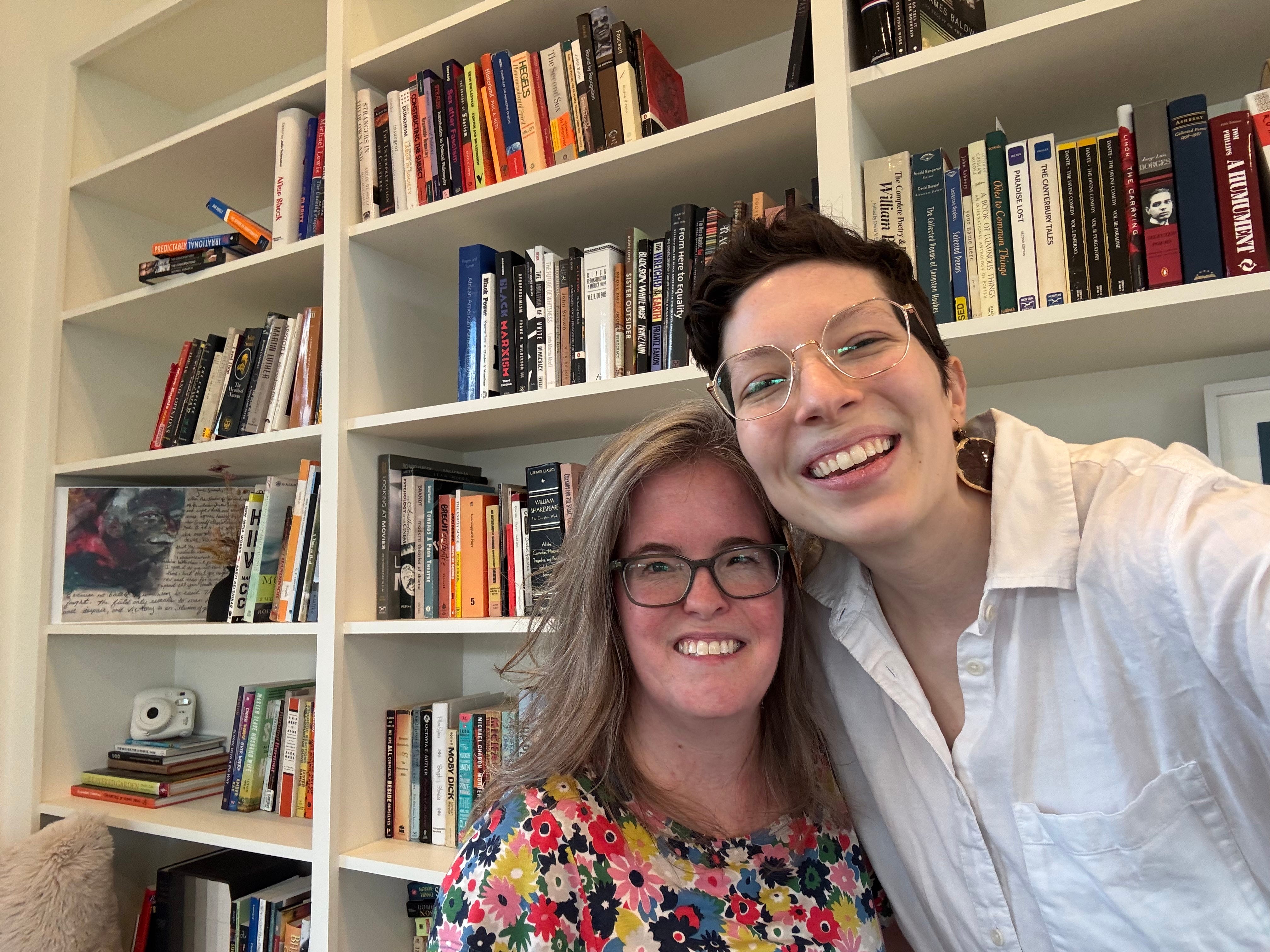
In December of 2019 a friend sent me an essay titled “You don’t have to be good.” I was immediately drawn to the title because it was taken from a Mary Oliver poem that my therapist sometimes read to me at the end of our sessions:
You do not have to be good.
You do not have to walk on your knees
for a hundred miles through the desert, repenting.
You only have to let the soft animal of your body
love what it loves.
The essay was from The Chronicle, the Duke University student newspaper, part of a weekly column published in 2019-2020 called “Feel Your Feelings.” Liddy Grantland, then a senior at Duke, was writing this column almost 15 years after my senior year at Duke.
This particular essay was about what it was like to live with chronic pain, and how safe and worthy Liddy feels when she inhabits spaces where that pain is accommodated, and not seen as inconvenient or abnormal. While reading the essay I felt my own body relax. Even after decades of practice, I often label my visibly disabled body “bad,” and this impulse was especially present when I was an undergraduate at Duke, when my body didn’t look like everyone else’s body when it was sitting in classrooms or at sorority formals or in the dining hall or on the campus bus.
I clicked on the rest of Liddy’s column in The Chronicle, desperate to read more from her, to feel the sense of ease and acceptance that radiated from her words. It was like she had created a safe, vibrant, expansive little world that I got to inhabit when I read her words. I also found reminders of my own life everywhere in the essays she’d published that year.
She wrote about her time volunteering at the Ronald McDonald House Family Room during college, where she managed a room for parents of sick kids being treated at Duke, making sure they had a comfortable place to stay, with snacks and laundry and warm showers. Making sure they felt cared for, in big and small ways.
It made me think of my own family, who watched helplessly as I underwent surgeries as a child at the same hospital. I wondered if there’d been someone like Liddy in the building to make them comfortable, to soothe them, to make sure they were eating and resting during an uncertain day.
While I was at Duke my sorority volunteered at the Ronald McDonald House once a month. We cooked dinner in the communal kitchens — usually grilled cheese and tomato soup — for the families and hospitalized children staying there. I never looked around, never thought much of it then. I had walled off that part of myself, intending to always keep it locked away.
Liddy wrote about the complicated surgeries she’d undergone as an adolescent to repair her scoliosis, surgeries that had made her pain worse, not better.
I thought of my own time in the medical system: the surgeries, the days and weeks I’d spent in the care of medical professionals in those same sterile halls. The times the doctors had been right. The times the doctors had been wrong. The times I’d felt like an object instead of a person. The times I didn’t have words to talk about what I was going through.
I thought about how I hadn’t written down any of these stories before, even just for myself, even though I was 15 years older than Liddy. These were stories that circled the back of my brain sometimes, but I’d rarely put them on the page. I hadn’t even spoken about them much, even to friends and family — only sometimes behind the closed doors of my therapist’s office, and then later to my husband.
I didn’t know how to bring that part of myself out into the light without offending others, without causing pain, without making my family sad, without making strangers and loved ones pity me, without making people see me differently than the capable, sunny Allison they loved, that made them comfortable.
I didn’t know how to bring that part of myself into the light without overwhelm, without admitting my own weakness and difference. I didn’t know if I was strong enough for that. But Liddy had figured it out, at Duke, no less — and so much sooner than I had.
I kept up with Liddy’s column throughout the rest of 2020. I was particularly moved by what she wrote in her May 2020 column, titled “Let it Soften You,” which she wrote while grappling with a senior year truncated by a global pandemic. It read:
“Duke is not a gentle place. It will not teach you how to be open or porous or soft; it will teach you the opposite. It will look at a global crisis and say: keep learning! It will not make space for your grief or trauma or pain. It will convince you that it is normal to feel exhausted, hopeless and alone. It will hand you all the tools you need to construct a hard outer shell.
But if I have any advice to the people I have left behind, the people I am leaving with, it’s this: try to let it soften you anyway.”
I read these words wide eyed. These conversations were happening at Duke? In the school paper? At my alma mater? I couldn’t believe it. I hoped the students were reading her words. I hoped they were taking them seriously.
I thought about the person I was at Duke, how desperate I’d been to de-emphasize my own body, thinking that it was weakness, and that in a place like Duke I had to be strong, even when I felt weak, especially when I felt weak.
What would it have been like for me to be soft at a place like Duke?
I thought about the tools I’d gathered for my hard outer shell. The tool of never talking about my body, never drawing attention to its difference except with self-deprecating jokes. The tool of avoiding other people around me who were different in the hopes that people wouldn’t think of us as similar.
I remember friends inviting me to Common Ground, a yearly student-led retreat exploring personal identity. It was a special week; students talked about hard things, they bonded, they made new friends, new connections. I never went.
I never saw anyone else at Duke with my same physical disability, but I remember another woman in my class who used a wheelchair, and how I used to see her around sometimes but never once made the effort to talk to her.
During my senior year a writing professor approached me after class with a piece of paper in her hand. “I don’t think of you as disabled, Allison,” she said, “but there’s a call for essays about disability that I think you should submit to.” I knew immediately that I wouldn’t submit, and I never did.
I was only partially aware of these choices I made. These choices to distance myself from the reality of my body were so learned, the grooves so deep, that I didn’t think much of them.
When I was a student at Duke in the early 2000’s there was a phrase used around campus to describe the dominant culture that had sprung up: effortless perfection. A term coined by the 2003 Duke Women’s Initiative Report, effortless perfection “creates a campus environment wherein it often feels like fitting in requires having no flaws, so nobody shows any hint of struggle even as those struggles grow larger and more dangerous by the day.1”
I thought about all the energy I funneled toward this one goal while I was at Duke: downplaying my own flaws, even trying to “overcome” them by being even stronger, even better. The same energy Liddy was funneling toward writing these beautiful, life-giving words.
Liddy’s words were introduced to me during a year when I had begun excavating my own unspoken experiences with increased urgency. It felt like synchronicity. Spurred on by the safe space that Liddy’s words created for my body, I started reading more books by writers delving into topics of disability and chronic illness. Those pieces of myself that I had discarded, that I was afraid to bring into the light, that made me ashamed — Liddy helped give those pieces back to me so that I could be my whole self.
***
In 2021 Liddy joined the Monday Night Writers, an ongoing writing workshop that I’ve been teaching since 2018 for adult women writers working on memoir and personal essay.
In this group we find words to talk about hard stuff, stuff that most people didn’t talk about in polite company, stuff that the world tells us to keep quiet. Divorce and illness, family rupture, disability, religious trauma. We get to know each other deeply, and very quickly.
When she joined my workshop I was starstruck. And a little overwhelmed, out of my depth. What could I possibly have to teach Liddy? She had been teaching me.
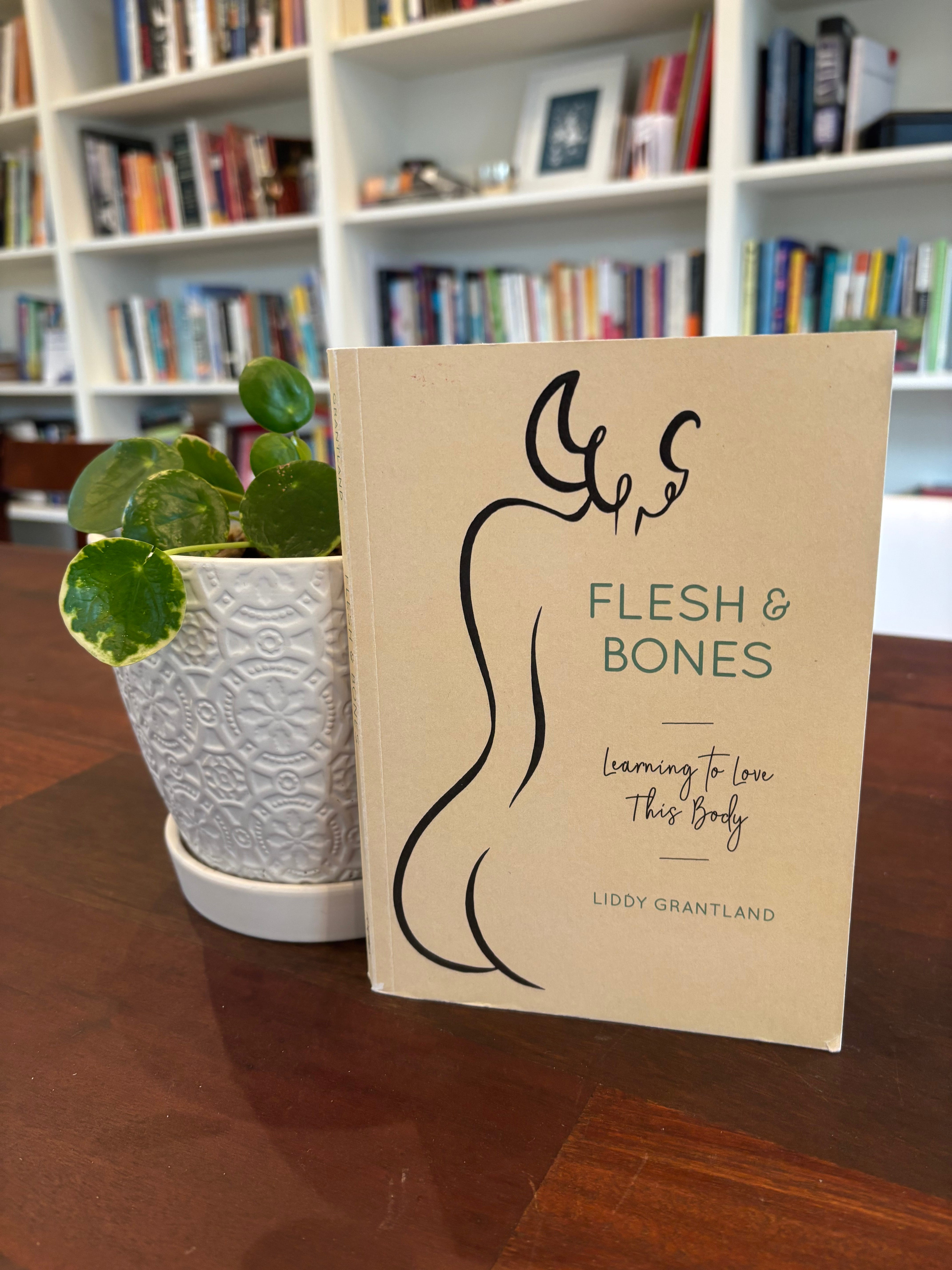
A compilation of Liddy’s Chronicle essays had just been published in book form. It was called Flesh & Bones: Learning to Love This Body. I was invited to her book launch, which was held on the Duke campus, in the building next to my freshman dorm, so close that I could almost feel my 18 year old self walking the campus.
Liddy signed my book in bubbly pink penmanship: “Thank you for opening the spaces for women writers everywhere. With love, Liddy.”
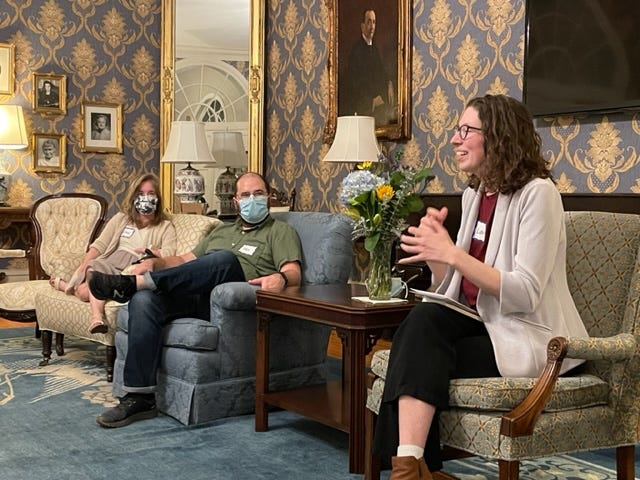
It was an honor to work with Liddy in this group for the next few years. I joked that Liddy wrote about “all the things we don’t talk about.” Barfing, blood, bras, periods, ill-fitting clothing. In other words, the ways that bodies are unruly, wild, uncontained. In her expert voice, she turned things that were unruly into things that were always worthy of love. Considering she was from South Carolina, a place I imagined was even more Southern-proper than my home state of North Carolina, I was astounded by her authenticity.
Over time I learned that Liddy and I had some really fun things in common, too: we both participated in the semester “abroad” program Duke in New York our junior year; we both had some of the same favorite professors at Duke; we both subscribed to New York Magazine; we both loved musical theater and the Sondheim song “Being Alive.” We were both alto singers and theater kids who loved singing in choirs.
When Liddy joined our group she was just out of college and working as a caregiver at L’Arche DC, a Medicaid-funded home for adults with developmental and intellectual disabilities. She wrote a lot about her time there and I was immediately struck by the ways in which she brought that community to life.
The language used for that population is often one of pity, distance or spiritualized reverence (“little angels here on earth”). Liddy simply wrote them as people, not above or below anyone else. It was revelatory. I’d never seen anyone do it before.
Here was another gift Liddy gave me: because she was writing about her own body, a body that was outside the norm, and about living with chronic illness, and about working with those whose bodies and minds were outside the norm, there was a lot she could learn from someone who was also navigating those topics.
Since adulthood I’ve felt like an imposter in most spaces. Maybe everyone does? Maybe those whose difference is marked on their bodies wonder their entire lives if they have anything to teach a world that doesn’t look much like them? It was a rare thing for me to be a guide not in spite of my disability, but because of what I was learning from it. Knowing that someone with Liddy’s wisdom and talent had sought out my classroom, my guidance, made me feel like I had something to offer.
***
Sometimes I would get angry at myself when I thought about the writing Liddy was doing in class. She was so much further along than I was when it came to accepting the realities of her own body, realities that might make her seem weak.
“Who could I have been,” I would ask my therapist, “If I had grappled with all of this sooner, like Liddy has? What could I have made? What could I have done? Who could I have changed? What kind of community could I have built?”
Was there a Disability Alliance at Duke when I was a student? I don’t know. Could I have volunteered at the Ronald McDonald House in a similar capacity as Liddy? I never asked. Were there people at Duke having conversations about disability 15 years ago? If so, I never sought them out.
(It would be years before I learned not to turn that anger and blame toward myself and instead outward toward a world that told me in so many direct and indirect ways that my body would only be good if I was strong enough to overcome its weakness, its difference.)
And yes, I couldn’t discount the fact that Liddy had grown up in a different time. In 15 years the conversation around disability, chronic pain and difference had changed. There was more neutral, more inclusive language in place that hadn’t been there before: limb difference instead of birth defect; developmental disability instead of the r-word. When the language was less shaming, it became more inviting to explore this identity. There was activism around disability issues, and networks of disabled adult activists who were fighting for rights, cementing this new neutral language, building community and a shared understanding of lived experience.
But it wasn’t just a different time. This was who Liddy was. Because Liddy had accepted the realities of her own body, she was free to create something beautiful.
***
Liddy took a short hiatus from the group while she acclimated to the first semester of a graduate program in social work. I remember thinking at the time that I was happy she was training to be a therapist, but I hoped it wouldn’t take time away from her writing. It didn’t. She was still writing a lot on her Substack Our Bodies: Ourselves, and had begun publishing in prestigious literary magazines. I couldn’t wait to see her get another book published, find new audiences for her work, maybe go on a book tour.
In January of 2025 the Monday Night Writers received an email from Liddy telling us that she had been diagnosed with metastatic breast cancer over the holidays. She was only 26. We reeled in disbelief.
As soon as she acclimated to her graduate school schedule, she re-joined the Monday Night Writers. Just as she had written about a body living with chronic pain, she began to write about a body living with cancer.
As always, her writing was so vulnerable, so tender. She wrote about grieving her infertility when she went into medical menopause at age 26. She wrote about how her disabled identity intersected with her queer identity. She wrote about watching the TV series “Dying for Sex,” from the point of view of someone with the same terminal illness. She confronted her reality and she didn’t flinch – instead, she learned, she wrote.
She died much sooner than any of us expected, on May 30th, 2026.
I thought we would get to read her 2nd, 3rd, 4th book. I thought I would continue learning from her about how to exist in my unruly, imperfect “bad” body. In these last months I have been re-reading Liddy’s words, remembering. But still, I am in deep grief, for myself and for the world.
I learned a lot from Liddy in the 6 years that I knew her. I learned about compassion and service. I learned about leaning into one’s gifts. I learned about the craft of writing. I learned about how to build real community, community that doesn’t budge when the hard stuff happens. I learned about kindness and grace. Her writing was generous in its authenticity and its truth; she laid herself bare in the hopes that it might help someone else. And that is not easy. And sometimes it comes at a cost. But because of Liddy I want to be bolder. I want to be kinder.
But I think the lesson that will stick with me the longest is the way she didn’t turn away from reality, or try to “overcome” it with strength, but confronted it bravely and then asked what else was possible, within that reality. She inhabited that unique space of possibility that only opens up to us when we accept what’s actually in front of us, without sugarcoating it, without denying it, without wanting more, without overcoming. I think back to the way in which she wrote about the earliest days of the pandemic in The Chronicle:
“I’m telling you, there was so much more bread than there was before! And people gathered on their balconies, to applaud at the sky, to make music together.”
So there’s a global pandemic. But there’s also fresh homemade sourdough bread and music and new community rituals being made.
So I had childhood surgery that made my body hurt. That means now I can comfort those going through the same thing.
So I can never be strong, not in the ways I want to be. So how can I exist in my weakness, and what can weakness bring me that strength cannot?
I don’t want to live with a hard outer shell. So how can I soften, and what will I learn from it?
So I will always be in pain. What can the pain teach me, and how can I make that pain easier for others to bear?
So I have a disability. What sort of new communities, new people can I find to share my world with? Who can I be, now that I’m facing it, and what kind of world can I help build?
Thank you Liddy.
Read Liddy’s writing:
Our Bodies: Ourselves, the Substack Liddy launched in 2023
Flesh & Bones: Learning to Love This Body, published in 2021
Why Wouldn’t Cancer Radicalize You?, Elephants and Tea Magazine, April 2026
Reverse Landing Strip, Intima: A Journal of Narrative Medicine, Spring/Summer 2025
What My Body Remembers, Pleiades Magazine, Spring/Summer 2024
L’Arche’s New Chapter is About Interdependence, Sojourners, April 2023
You are reading the intangibles, by writer and creative writing instructor Allison Kirkland.
All writers should be paid for their work. But if a paid subscription doesn't make sense for you right now, there are other ways to support the growth of this reader-supported publication:
click that little heart to "like" the post, which ensures that more people will see it
gift a subscription to a creative friend
share this essay
leave a comment and continue the conversation
Thanks for reading. I’m so glad you’re here.
[Logo by Morgan Riker]
That was such a beautiful tribute to Liddy, Allison. I was deeply touched. Looking forward to your future writing classes.
lovingly,
Joanne
You wrote about Liddy!! ❣️❣️❣️
As Liddy would often say, "LOVE!"
Thank you for folding Liddy into your life story, Allison, and writing about your feelings so clearly. That was a powerful piece. The ripples of Liddy's influence are many, wide and deep.